

Delta Electronics Thailand Carries The SET At 3.2 Trillion Baht As Domestic Data Centres Pause
Exploring the implications of Thailand's data centre policy pause on Delta Electronics and the broader market landscape.
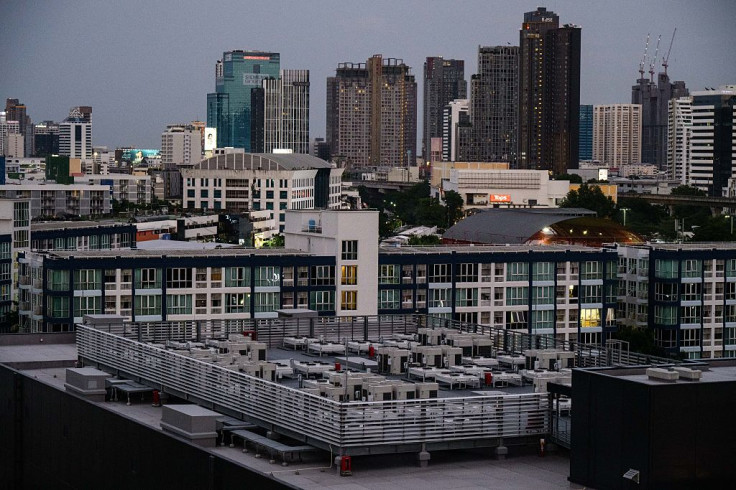
BANGKOK — Thailand's new data centre policy board ordered a pause on 166 projects at its first meeting on Sept. 4, covering 49 sites under construction and 117 awaiting permission, while four subcommittees spend a month drafting national standards.
The country's largest listed company makes data centre power and cooling equipment. It is unlikely to notice.
Delta Electronics (Thailand) PCL had a market capitalisation of about 3.24 trillion baht on the Stock Exchange of Thailand's own factsheet, dated March 23 — far larger than any other Thai company. Its business is power management: power supplies for servers, cooling systems, modular data centre designs, the electrical hardware that AI computing runs on.
The reason the domestic pause barely touches it is geographic. Delta manufactures in Thailand and sells to the world. Its largest revenue market is the United States, followed by Singapore, Germany and Taiwan. The customers driving its order book are the global cloud operators building in North America and Europe, not the developers whose Thai sites have just been asked to stop.
The scale of the business
Delta reported record first-quarter revenue of 61.38 billion baht in 2026, which chief executive Victor Cheng put at a 56.2 percent year-on-year increase, with net profit of 9.08 billion baht. Power electronics accounted for 71 percent of revenue. Gross margin reached 31.7 percent.
Cheng attributed the growth to strong orders, high output and expanded capacity, with data centre products the key driver. Delta has described Thailand as its largest focus for capital expenditure and capacity expansion.
Full-year 2025 revenue was around US$6 billion. The company crossed a US$100 billion market capitalisation in February.
Who the pause actually hits
The businesses exposed to a Thai data centre halt are different ones, and they are mostly domestic.
Power producers are first in line. Bangkok's six applications each required between 9 and 23 megawatts, and the pause covers projects at every stage from foundations to filed paperwork. Global Power Synergy appeared on a panel on data centre energy readiness at an industry summit in Bangkok in August, alongside Bangkok Bank — a pairing that indicates where the financing and generation exposure sits.
Then construction firms, industrial estate operators, land holders and the local subsidiaries of overseas operators, none of which can bill for a project that is not being built.
Delta sits above all of that. It sells components into a global buildout; Thailand is where it manufactures, not primarily where it sells.
The concentration problem
This produces an unusual situation for anyone holding Thai equities.
The SET Index has risen close to 30 percent since the start of the year, on the exchange's own account in late August, with foreign investors recording net purchases of 67 billion baht. Delta is a substantial part of that performance. Its shares have moved violently in the process: the exchange's March factsheet records a 52-week range of 51.25 to 292.00 baht, with the stock at 260.
An index that rises on one company's earnings is not diversified in the way an index normally implies. Buying Thai market exposure currently means taking a large position in a single manufacturer whose demand comes from American and European capital expenditure decisions.
That is our reading of the numbers rather than any analyst's, but the underlying figures are the exchange's own.
What the valuation assumes
The March factsheet also records a price-to-earnings ratio of 130.70, a price-to-book of 33.53 and an enterprise value to EBITDA multiple of 88.31.
Those are figures that price in sustained growth for years. They also mean the shares are sensitive to anything that interrupts the AI infrastructure cycle — and Delta's own reporting has flagged such risks. Analyst commentary in August pointed to an inventory provision charge of 800 million baht in the second quarter, tied to project timing slipping, and to the possibility of repetition if customer drawdowns slow.
Middle East conflict affecting logistics and petroleum-based inputs, and sanctions affecting Chinese semiconductor suppliers, have both been identified as risks to shipment timing.
The argument the pause does not settle
There is a version of Thailand's AI ambition in which the country hosts the computing. There is another in which it manufactures the equipment and hosts comparatively little.
Thailand is currently succeeding at the second and has just paused the first. The pause is defensible on its own terms — the standards are genuinely absent, and a data centre that has not yet opened was found this week discharging fuel into a Bangkok public drain. But the two facts sit side by side, and the country's largest company is on the side that does not require domestic construction.
What to watch
Delta's third-quarter results and any commentary on Thai demand. The company has not been reported as citing the domestic pause as a factor. If its guidance is unchanged, that confirms the exposure gap. If it is not, the pause reaches further than currently appears.
Whether Global Power Synergy or lenders disclose affected exposure. Power producers and banks with data centre commitments have a clearer route to material impact than the equipment makers, and disclosure obligations that may surface it.
Whether the SET's listing reforms bring data centre operators to market. The exchange eased its criteria from Sept. 11 and has been targeting data centre and semiconductor firms for listings. Whether any of them list while the sector is paused is a real test of both policies.