

Thailand Pauses 166 Data Centre Projects As Bangkok Investigates A Fuel Spill At An Unopened Site
Four panels have a month to write the rules. The industry they will govern is one the state cannot currently count — some of it is registered as warehousing.
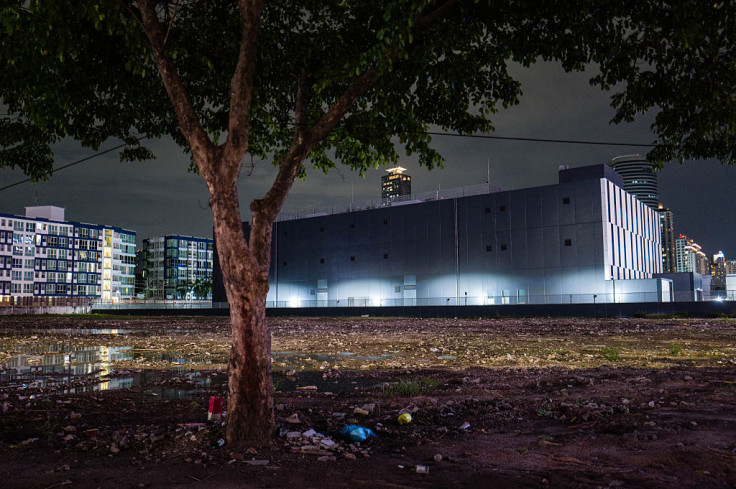
BANGKOK — Thailand's new data centre policy board ordered a temporary pause on 166 projects at its first meeting on Sept. 4, covering 49 sites under construction and 117 awaiting permission from various agencies, while officials draw up national standards on resource use, siting, safety and economic benefit.
Four subcommittees have one month to produce the criteria. Deputy Prime Minister and Finance Minister Ekniti Nitithanprapas, who chaired the meeting, set out three immediate priorities: consolidating data on the industry, establishing minimum standards, and increasing what Thailand gets from the investment.
The panels are divided by subject and chaired by senior officials — economic benefits under the secretary-general of the National Economic and Social Development Council, infrastructure under the permanent secretary for energy, sites and buildings under the permanent secretary for interior, and environment under the permanent secretary for natural resources and environment.
The week that produced the decision
The pause did not arrive from a policy paper. It arrived at the end of a week in which a Bangkok data centre that has not yet opened was found discharging oily water into a public drain.
Residents near Soi Rama IX 6, in the Bang Kapi subdistrict of Huai Khwang, reported a strong oil-like smell causing nasal irritation and itching. Natural Resources and Environment Minister Suchart Chomklin ordered the Pollution Control Department to identify the source.
Inspectors found murky brown water with sediment and an oily film at a drainage outlet leading off the premises, and similar contamination in a public drain in front of the building that connects to Khlong Samsen Nok. Preliminary testing found total volatile organic compounds at 6 parts per million inside the site and 3 ppm in the public drain outside. Laboratory results are expected within about seven days.
The facility has not begun operating and is testing its cooling system. According to preliminary information the operator gave officials, a contractor engaged in July to test backup generators placed fuel containers near a wastewater collection pit, and an accidental spill sent fuel onto the ground and into the public drainage system. The Pollution Control Department said further scientific testing is needed to confirm the cause.
Huai Khwang District Office has ordered the operator to clear the residue, meet discharge standards and put preventive measures in place within seven days.
What "pause" means, and what it may not
The scope of the pause is not settled, and the discrepancy is worth stating plainly.
The board's decision is described as a temporary halt covering all 166 projects. But Danucha Pichayanan, the NESDC secretary-general, told AFP separately that the government does not have the power to suspend construction of the 49 sites already being built, and that developers are being asked to cooperate voluntarily.
One reading reconciles these: the state controls approvals, so the 117 applications can genuinely be held, while the 49 sites under construction can only be asked. No official has said this, and it is our inference rather than anyone's account — but it is the reading most consistent with both statements. Until the board publishes its decision, whether the 49 stop is a matter of goodwill.
An industry the state cannot count
The most striking admission in the board's own material is how little the government knows about the sector it is pausing.
Data gathered from 16 agencies identified 35 data centres already operating. Eleven had investment promotion from the Board of Investment; 24 were permitted through other channels, most of them inside industrial estates already subject to site controls. Financial institutions run a further three or four smaller facilities.
Investors currently apply separately to electricity utilities, water authorities and local building regulators, each assessing only its own remit. No single body holds a complete picture of a project's resource demands, its distance from housing, or its economic return against its cost.
Some data centres are registered under other business categories, including warehousing, which makes the industry's true scale difficult to establish at all. The board has instructed the Department of Business Development to create a dedicated classification.
Officials will also revisit a proposal to regulate data centres drawing more than 2 megawatts as industrial factories. The board considered that threshold too low for the scale of projects now in the market.
Bangkok's own count
Bangkok Governor Chadchart Sittipunt said six data centre projects had applied for permission in the capital, each requiring between 9 and 23 megawatts of electricity. Three were approved and began operating between 2022 and 2024. The remaining three will stay on hold until national standards exist.
City officials will carry out spot checks on noise, heat, safety and other nuisance effects on surrounding communities, and feed the findings into the new rules. Deputy Governor Pornphrom Vikitsreth has already visited Telehouse Thailand in Huai Khwang and DAMAC Digital Thailand's BKK02 site in Suan Luang as part of that broader oversight. Neither visit is connected to the Rama IX complaint.
What the rules are meant to do
New projects will face requirements on town planning, separation from neighbouring buildings, safety, electrical systems, backup fuel storage and environmental protection. Existing operators are to get a transition period.
Beyond the physical standards, the board wants data centres to deliver domestically — access to cloud services and AI computing capacity for Thai users and small businesses at affordable cost, plus employment, technology transfer and clean-energy commitments assessed through a competitive process for future projects.
One line in the board's reasoning stands out. Water and electricity prices, it holds, should reflect direct and indirect costs, so that households and other businesses are not subsidising large operators' resource use. That is a considerably sharper position than the investment-promotion language that has surrounded this sector until now.
Board of Investment secretary-general Narit Therdsteerasukdi said clear rules would strengthen long-term investor confidence by letting businesses understand costs, conditions and resource availability from the outset.