

Thailand Asks 49 Data Centre Projects To Pause While It Writes New AI Rules
Government seeks voluntary halt on data centre construction pending new regulations
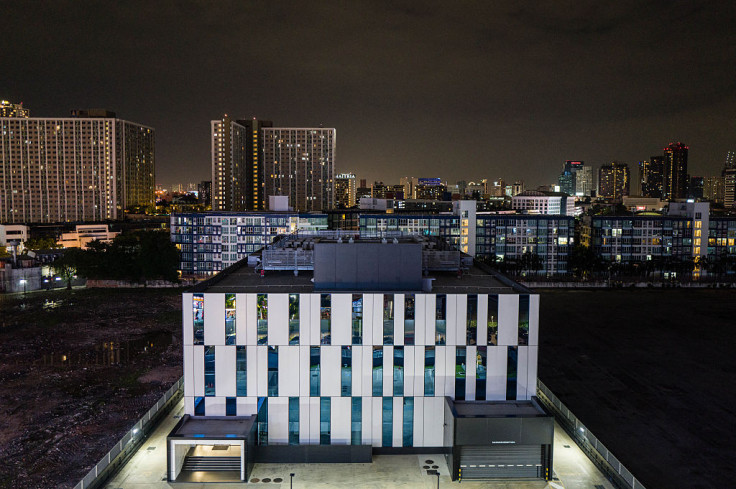
BANGKOK — Thailand's government has asked developers of 49 data centres under construction to hold off until new regulations are written, following the first meeting on Friday of a committee set up to oversee the sector.
Prime Minister Anutin Charnvirakul said Thailand was drawing interest from domestic and foreign investors and needed to ensure that development aligned with the country's laws, standards and national interest. Regulations would be revised to be "airtight" and to prioritise public safety, he said. Officials expect the new rules within a month.
What was actually announced
The word travelling with this story is "suspension," and it is not the word the government used.
Danucha Pichayanan, secretary-general of the National Economic and Social Development Council, told AFP that "we don't have the power to suspend the construction of the 49 data centres" before the new rules exist. Developers, he said, are being asked to cooperate and to halt voluntarily while clearer regulations are drafted.
That distinction is the story. A request for voluntary cooperation and a construction freeze produce very different outcomes, and only one of them is enforceable. Several outlets have reported the projects as frozen or suspended. On the account of the official who announced the measure, they are not.
Whether developers comply, and which ones, is therefore an open question rather than a settled fact — and it is the thing to report next.
The scale of the pipeline
Danucha set out the numbers. Around 35 data centres are operating in Thailand. Another 49 are under construction. Eleven projects have been approved and 117 more are under review.
That is roughly 212 facilities existing, building or queued, in a country where the sector barely registered five years ago.
The pace of approvals tells the same story. Thailand's Board of Investment approved 88 artificial intelligence and data centre projects worth 886 billion baht in the first half of 2026 alone — already ahead of the 623 billion baht recorded across the whole of 2025.
Why the government moved
The pressure is coming from two directions at once: physical constraints and public opposition.
Data centres consume large volumes of electricity and water, and the expansion has outpaced the rules governing it. Concern about the effect on power supply, water resources and neighbouring communities has grown alongside the buildout, in Thailand and elsewhere.
The international context is not incidental. At least 75 data centre projects worth roughly US$130 billion were blocked or delayed by local opposition worldwide during the first three months of 2026, according to the research group Data Center Watch. Objections have centred on environmental impact and resource consumption, and, more broadly, on how artificial intelligence may reshape employment. In the United States, opposition to data centres has become a factor in the November midterm elections.
Thailand is a comparatively late entrant to that argument, and its government appears to have noticed the trajectory elsewhere before the same dynamic arrived at home.
What is at stake commercially
The pause lands on a sector Thailand has spent two years courting.
Google opened a Bangkok cloud region in January, saying it would add more than US$40 billion to the Thai economy over five years. Microsoft committed more than US$1 billion in March to cloud and AI data centre infrastructure and operations in Thailand over two years. In May, the Board of Investment cleared a data infrastructure expansion for TikTok System (Thailand).
Finance Minister Ekniti Nitithanprapas, who chaired Friday's committee meeting, said the pause did not mean Thailand was closing the door to data centre investment, describing the industry as critical to the country's competitiveness.
That framing matters for a government simultaneously negotiating tariff terms with Washington on the argument that Thailand is a reliable, high-value manufacturing and services base. A regulatory pause presented as a delay is a different signal to investors than one presented as a reversal, and the finance ministry is being careful about which it is.
The month that follows
The substance is in the rules, and nobody outside government has seen them.
What they cover will determine whether this is a genuine tightening or a formalisation of the status quo. The obvious questions are whether the rules set binding limits on power and water consumption, whether they impose siting restrictions near residential areas, whether they require community consultation, and whether existing operators are grandfathered.
None of that has been published. A one-month drafting window for a framework governing a 212-project pipeline is also, on its face, fast.
What to watch
Whether the 49 developers actually stop. This is the immediate test, and it is measurable. Since the request is voluntary by the government's own account, compliance will vary — and a visible split between firms that pause and firms that continue would tell you more about the state's leverage over this sector than any regulation does.
What the rules bind, and what they merely encourage. Watch specifically for enforceable thresholds on electricity and water. A framework of guidance and disclosure obligations is a materially weaker instrument than one setting consumption caps or siting rules, and both would be announced in similar language.
Whether the 117 projects under review keep moving. Reporting has variously described these as under review and as frozen. If approvals continue during the drafting month, the pause applies only to companies that already committed capital — which would be an odd incentive to create.