

Techsauce Global Summit 2026 opens in Bangkok as Thailand targets $43.6 billion AI economy
OpenAI and Alibaba headline Bangkok summit as record investment flows into Thailand's AI infrastructure
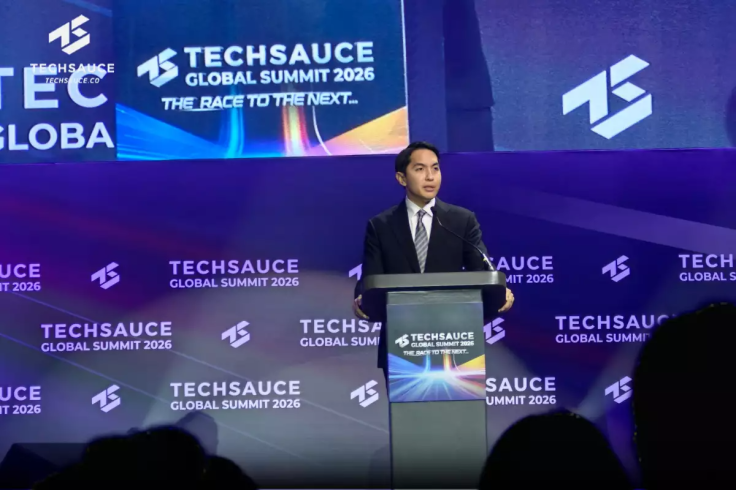
Day One of Southeast Asia's most consequential annual technology gatherings drew a full house on Wednesday at Bangkok's Queen Sirikit National Convention Center (QSNCC), as Techsauce Global Summit 2026 began its three-day programme with a question running through every session: in a world advancing on multiple technological fronts at once, are you setting the pace or falling behind?
The summit comes as Thailand's investment figures give that question immediate weight. The Board of Investment received applications worth 1.47 trillion baht, or about $43.6 billion, during the first half of 2026, a 37% year-on-year surge driven by capital flowing into digital infrastructure and AI data centres. The digital sector accounted for 1.12 trillion baht, or about $33 billion, representing roughly 76% of the total. Thailand's AI Economy strategy therefore rests on an investment wave concentrated in a single, geographically mobile sector. Building an application-layer software ecosystem that makes this infrastructure harder for investors to move to another low-cost location is a central theme of TSGS 2026.
The summit, organised by Bangkok-based Techsauce Media and co-supported by the Thailand Convention and Exhibition Bureau (TCEB), runs through Aug 28 at Exhibition Halls 3 and 4 of the QSNCC. This year's edition is its most ambitious yet, featuring more than 300 sessions, over 350 exhibition booths, more than 40 hands-on workshops and more than 400 speakers from organisations including OpenAI, Alibaba, SenseTime, the Cambridge Innovation Center, BlackRock, WHOOP, DIGITIMES and the World Bank. More than 20,000 attendees from over 60 countries have registered.
Thailand's three-pillar economic strategy
The Day One keynote that best captured the summit's stakes came from Santitarn Sathirathai, Thailand's vice minister of finance. In a Main Stadium address titled "New Horizons for Thailand's Economy: Connecting Technology to Growth", he outlined the government's three-pillar framework for economic growth.
His framing was unconventional for a finance official. Rather than opening with macroeconomic indicators, he challenged the audience to consider what the BOI investment figures actually mean. "The real question is not how much investment pours in, but how much real, lasting potential it creates for the country," he told the packed venue.
The three pillars are the AI Economy, the Longevity Economy and the Green Economy. Thailand is not seeking to compete with OpenAI, Anthropic or Alibaba in foundation models, a field requiring capital and computing infrastructure on a scale few countries can match. Instead, it aims to compete at the application layer by developing vertical AI solutions for healthcare, tourism, agriculture, logistics and financial services.
Training large foundation models requires tens of thousands of specialised GPUs, petabytes of curated data and teams of machine-learning engineers. Deploying and fine-tuning applications requires API access, sector expertise and integration engineering — capabilities that Thailand is steadily developing.
Santitarn also presented Thailand as a "Trusted Connector": a country with relationships across Western and Asian spheres, a stable manufacturing base and a long record of attracting international capital, now positioned as an important link in fragmented global supply chains. BOI-approved projects during the first half of 2026 are expected to create more than 82,000 jobs for Thai workers and consume about $11.4 billion in domestic raw materials each year, equal to roughly 42% of total production inputs across those projects. Export capacity from the approved projects is projected to rise by more than $36.8 billion, or about 1.24 trillion baht, annually.
The BOI SkillBridge programme, which Santitarn highlighted as a mechanism for linking inbound investment with workforce reskilling, had approved 35 projects as of the summit. The projects target the development of about 66,000 workers in AI, cloud computing, cybersecurity, semiconductors, robotics, biotechnology and medical technology. The programme reflects the government's recognition that data-centre investment does not automatically improve the skills of workers living nearby.
What agentic AI means — and why it dominates the Red Arena
The summit's flagship AI track in the Red Arena devoted its Day One programme entirely to agentic AI, a term now common in enterprise technology but often insufficiently defined for business leaders evaluating it.
Agentic AI systems differ from conventional chatbots and query-response systems in four ways: they receive a goal rather than merely a task; autonomously select and use tools to pursue that goal; maintain state across multiple inference steps instead of treating each exchange as independent; and produce a completed work product without human intervention at every stage. The difference is between asking AI to write a summary and asking it to research a question, prepare a report, send it to three stakeholders, and flag responses requiring attention — then having it complete the process.
By 2026, Gartner estimated that interest in multi-agent AI systems among enterprise architects had risen about 1,445% from early 2024 to mid-2025. Major vendors including Amazon, Microsoft, Salesforce, ServiceNow and Workday disclosed production agentic deployments affecting workforce planning in earnings calls during 2024 and 2025. The Model Context Protocol (MCP), a standard allowing agents to connect reliably to external tools and data sources, has become the connective layer for many serious enterprise deployments.
Sid Sharma, OpenAI's head of go-to-market for Southeast Asia and India, was among the Red Arena's featured Day One speakers. His presence as OpenAI's most senior commercial representative at the summit signals the company's focus on Southeast Asia's enterprise market, where agentic deployment is accelerating across sectors.
Maryann Tseng, senior managing director at SenseTime, also spoke. SenseTime is one of the world's largest AI companies by revenue, with expertise in computer vision and generative AI deployed across Asian markets. SenseTime and its subsidiary Beijing SenseTime have been on the US Commerce Department's Entity List since 2019 and the Office of Foreign Assets Control's military-industrial sanctions list since 2021 over alleged involvement in Uyghur surveillance technology in China. SenseTime has denied the allegations. Its participation reflects the company's continued commercial expansion in Southeast Asia despite its US regulatory status.
The Red Arena programme moved beyond the hype cycle, offering enterprise practitioners practical roadmaps for building what organisers called an "AI-native enterprise", where agentic systems handle routine workflows autonomously and free workers to focus on tasks requiring judgement. For Thailand, this application-layer approach is directly relevant: if the AI Economy strategy is to succeed, Thai enterprises — not only data centres owned by Singaporean and US-headquartered corporations — must be able to build and deploy agentic systems for local economic needs.
FinTech, FoodTech and Healthspan: three more layers of the same bet
TSGS 2026 is organised around five main stages, and Day One's parallel sessions showed that its AI focus extends beyond enterprise software.
The Blue Arena's FinTech stage presented Southeast Asia's financial system as infrastructure being rebuilt in real time. Sessions covered stablecoins, central bank digital currencies, real-world asset tokenisation, virtual banking, and AI-powered credit underwriting and fraud detection. Real-world asset tokenisation is the process of representing ownership of physical assets such as property or commodities as digital tokens on a blockchain.
The approach reflects a structural reality: Southeast Asia's large unbanked population and mobile-first consumers have made the region a live laboratory for financial infrastructure that bypasses legacy systems constraining Western incumbents.
The Green Arena's FoodTech Summit examined alternative proteins, precision fermentation, vertical farming and AI-accelerated food research and development. Precision fermentation uses microorganisms to produce food ingredients, including proteins, fats and flavour compounds, without conventional agriculture. Bangkok's SPACE-F accelerator programme, which develops food-technology ventures, was prominently represented.
On Day Two, the Blue Arena Healthspan Summit will shift from FinTech to longevity medicine, a field that has moved from fringe biohacking towards institutionally funded science. "Longevity" concerns how long people live, while "healthspan" concerns how well they live and for how long. The distinction reflects a shift towards compressing the period of decline rather than simply extending it. Kristen Holmes, WHOOP's global head of human performance and a principal scientist, is among the confirmed speakers. She specialises in translating biometric wearable data into guidance on sleep, recovery and stress.
Day One startup showcase: from the pitch stage to Silicon Valley
The Muay Thai Stage served as the startup showcase on Day One, combining live technology demonstrations with a pitching session in which early- and growth-stage ventures presented to investors and corporate decision-makers.
The competition culminates on Day Three with the Startup World Cup Southeast Asia Finale 2026, organised by Pegasus Tech Ventures, a Silicon Valley-based venture capital firm with about $2 billion in assets under management. The SEA Finale will run from 3pm to 5pm ICT on Aug 28 at the Muay Thai Stage. The region's leading startups will compete for a route to Pegasus's global Grand Finale.
The Grand Finale, Startup World Cup 2026, is scheduled for Nov 4-6 at the Hilton San Francisco Union Square. Two hundred regional champions from six continents will compete for a $1 million investment prize. The TSGS SEA Finale winner will advance directly to the event. Bill Reichert, a partner and chief evangelist at Pegasus Tech Ventures, is attending the summit as a featured speaker and evaluator.
Day Two: global leaders, Alibaba and the next entrepreneur track
Day Two's Main Stadium programme begins at 8am ICT and will feature Cindy Chow, executive director and chief executive officer of the Alibaba Hong Kong Entrepreneurs Fund. She is widely credited with backing several Hong Kong startups that reached unicorn status and offers a perspective linking mainland China's technology giants with global startup ecosystems.
Other confirmed speakers include Kfir Godrich, a former senior innovation executive at BlackRock and founder of mAIndfulness; Michelle Ottey, president of CIC Campuses and Labs at the Cambridge Innovation Center; Colley Hwang, chairman of DIGITIMES and a veteran ICT industry analyst; and investors Ian Goh of 01VC and Bill Reichert of Pegasus.
The Green Arena will move from FoodTech to the Next Entrepreneur stage, focusing on scaling playbooks, Southeast Asian startups' strategies for going global and investor views on what they are seeking in the current funding environment.
Day Two's afternoon programme includes Jan Lozek, managing partner at Future Energy Ventures, an energy and sustainability investor working at the intersection of AI and the clean-energy transition. The pairing reflects the summit's recognition that the growth of AI data centres carries substantial energy costs that cannot be separated from the Green Economy pillar.
Day Three: master classes, MarTech and the Startup World Cup SEA Finale
On Day Three, the Red Arena will replace the keynote format with an intensive Master Class programme featuring practical workshops on prompt engineering, AI-agent development and data-driven decision-making for non-technical business leaders.
The Blue Arena will host a MarTech stage examining how AI agents, first-party data and customer data platforms are enabling hyper-personalisation at scale, as well as how the phase-out of third-party cookies is forcing a structural rebuild of digital marketing infrastructure.
The Startup World Cup SEA Finale will run from 3pm to 5pm ICT on Aug 28 at the Muay Thai Stage, with promising regional ventures competing for a place in the Silicon Valley Grand Finale and the opportunity to win the $1 million investment prize.
The Techsauce Awards 2026, recognising achievements in technology innovation, startup growth and corporate digital transformation across Southeast Asia, will be presented during the three-day summit.
Bangkok's larger ambition
TSGS 2026 is not taking place in isolation. Thailand is preparing to host the IMF-World Bank Annual Meetings in Bangkok in October 2026, the city's first IMF hosting since 1991, under the theme "New Horizons: Empowering People, Building Resilience". The overlap with TSGS is notable: both events present Bangkok as a meeting point for global capital and regional economic ambition.
TCEB, which supports the summit, positions TSGS as a flagship demonstration of Thailand's ability to host world-class MICE events at scale. Bangkok hotel pricing reflects that demand, with rates during IMF week already about 98% higher than a year earlier. The QSNCC calendar is also packed with major international gatherings through December.
The concentration risk in Thailand's AI investment story is clear: 76% of the BOI's record first-half 2026 applications came from a single, infrastructure-heavy sector. Data-centre capital is geographically mobile and follows energy costs, land availability, water access and regulatory stability. Building software companies, AI product startups and enterprise adopters around that infrastructure is what can turn a capital inflow into durable economic capability. That is the case TSGS 2026 is making for Thailand at this stage of its transition.
Techsauce Global Summit 2026 continues through Aug 28 at Exhibition Halls 3-4 of the Queen Sirikit National Convention Center. Sessions run daily from 8am to 6pm ICT.
Currency conversions in this article are based on exchange rates as of Aug 26, 2026, and are approximate.
Originally published on Tech Times
ⓒ {{Year}} TECHTIMES.com All rights reserved. Do not reproduce without permission.