

Thai Foreign Minister Visits Malaysia Sept. 6 With Deep South Peace Dialogue Chief
Deputy PM Sihasak Phuangketkeow's Visit to Malaysia Focuses on Security and Trade
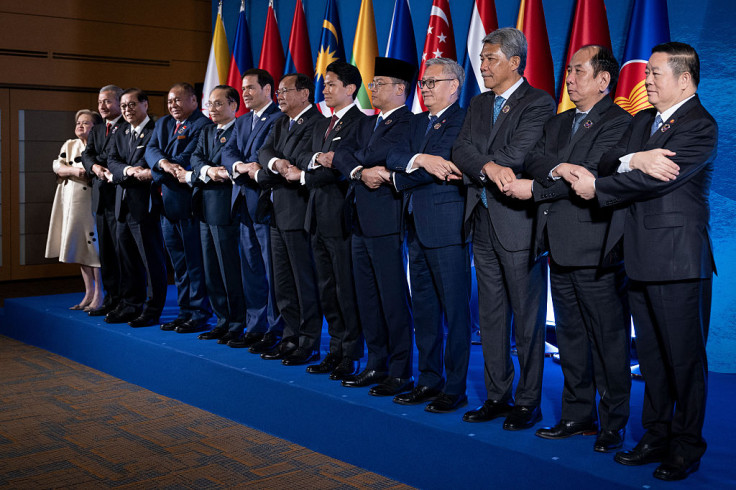
BANGKOK — Thailand's deputy prime minister and foreign minister, Sihasak Phuangketkeow, travels to Malaysia on Sunday for two days of talks on border security, accompanied by the official who leads Thailand's peace dialogue for the southern border provinces.
Foreign ministry spokesman Jaitai Upakarnitikaset said the visit runs from Sept. 6 to 7 and takes forward matters raised when Prime Minister Anutin Charnvirakul met Malaysian Prime Minister Anwar Ibrahim in July, when discussion centred on security cooperation and joint development of border areas.
Sihasak will be accompanied by Thanut Suvarnananda, director of the National Intelligence Agency and chief of the peace dialogue for Thailand's southern border provinces. The spokesman said the trip gives Thanut an opportunity to introduce himself to Malaysian counterparts.
Why the second name matters
That detail is the substance of the visit.
Malaysia has long played a facilitating role in the dialogue process concerning Thailand's southern border provinces, and the head of that process being formally introduced to Malaysian counterparts is a bilateral event in itself — more so than a foreign ministers' meeting on its own would be.
It comes weeks after incidents in the deep south on Aug. 22 and 23 which Sihasak said had damaged confidence among residents, investors and business operators in the region. He acknowledged intelligence shortcomings ahead of those attacks and called for better integration between the numerous agencies involved, and for a more effective early-warning system.
Thailand has discussed cross-border cooperation with Malaysia aimed at preventing suspected perpetrators from crossing the frontier, a matter raised during Anutin's July visit. Sihasak said Malaysian authorities had indicated readiness to cooperate.
A fence, and a trade target
On Sept. 1, the foreign ministry prepared to ask the cabinet to consider extending the existing fence along the Malaysian border, as part of efforts to curb drug trafficking and contraband smuggling in the southern provinces. Sihasak stressed that fencing already exists along parts of the frontier and that the proposal concerns additional construction rather than a new barrier.
Malaysia has its own version of the same concern. Foreign Minister Mohamad Hasan said in July that tightening border controls was crucial to curbing cross-border crime, particularly the "rat lanes" used by smugglers from both countries, and that coordination between the Royal Malaysia Police and the Malaysian Armed Forces was being detailed.
Three days after the fence proposal, Malaysia's ambassador to Thailand, Wan Zaidi Wan Abdullah, told reporters at a Bangkok trade fair that the two countries remained on course for US$30 billion in bilateral trade in 2027, and that documentation requirements were the main obstacle facing Malaysian products entering the Thai market.
Both things are true at once. The same border is being fenced and marketed.
What the trade numbers actually show
The US$30 billion figure deserves a closer look, because it may be less ambitious than it sounds.
Malaysia's foreign ministry said that in 2025 Thailand was Malaysia's sixth-largest trading partner globally and second-largest within ASEAN, with total trade of 118.57 billion ringgit, or US$27.73 billion. In the first quarter of 2026, bilateral trade reached 31.33 billion ringgit — US$7.90 billion — against 27.35 billion ringgit, or US$6.15 billion, in the same period a year earlier.
On the dollar run rate, 2026 alone could approach the figure being projected for 2027.
Tightened and exempted at once
The border policy sits inside a wider tightening that treats Malaysia as a special case.
From Sept. 15, Thailand's visa-free stay for most nationalities falls from 60 days to 30, and the list of eligible countries and territories drops from 93 to 60. Visa-exempt entries through land border crossings are generally limited to two per calendar year — but Malaysian nationals are exempt from that cap, along with those of Brunei, Indonesia and Singapore.
So Thailand is restricting land-border entry across the board while carving out the neighbour whose frontier it is simultaneously proposing to fence further.
There is no contradiction in that, strictly. One measure targets repeat visa-runners, the other targets smuggling routes, and neither is aimed at ordinary Malaysian travellers or traders. But the combination describes a border being managed in three registers at once — commercial, security and immigration — by agencies that do not always appear to be speaking to each other in public.